About | Suez Canal Republic
Suez
Canal
Republic
A field of infrastructural prototypes: operational devices, public testing, and technical systems made visible under real conditions.
About | Suez Canal Republic
A field of infrastructural prototypes: operational devices, public testing, and technical systems made visible under real conditions.
The Republic does not stage governance as fiction. It assembles small-scale systems that sense, calculate, transmit, and fail in public.
Exhibition space functions as a live environment for applied research. Each project is built as a limited but functional apparatus. The objective is not productization. It is exposure: how contemporary technological logics behave when stripped of institutional shelter and placed inside civic reality.
The Republic operates at the intersection of art practice and technical infrastructure, building devices, platforms, and protocols that remain inspectable, limited in scale, and public in character. Where institutional frameworks close, the Republic continues from the outside.

Each project is built as a limited but functional apparatus. The objective is not productization. It is exposure: how contemporary technological logics behave when stripped of institutional shelter.
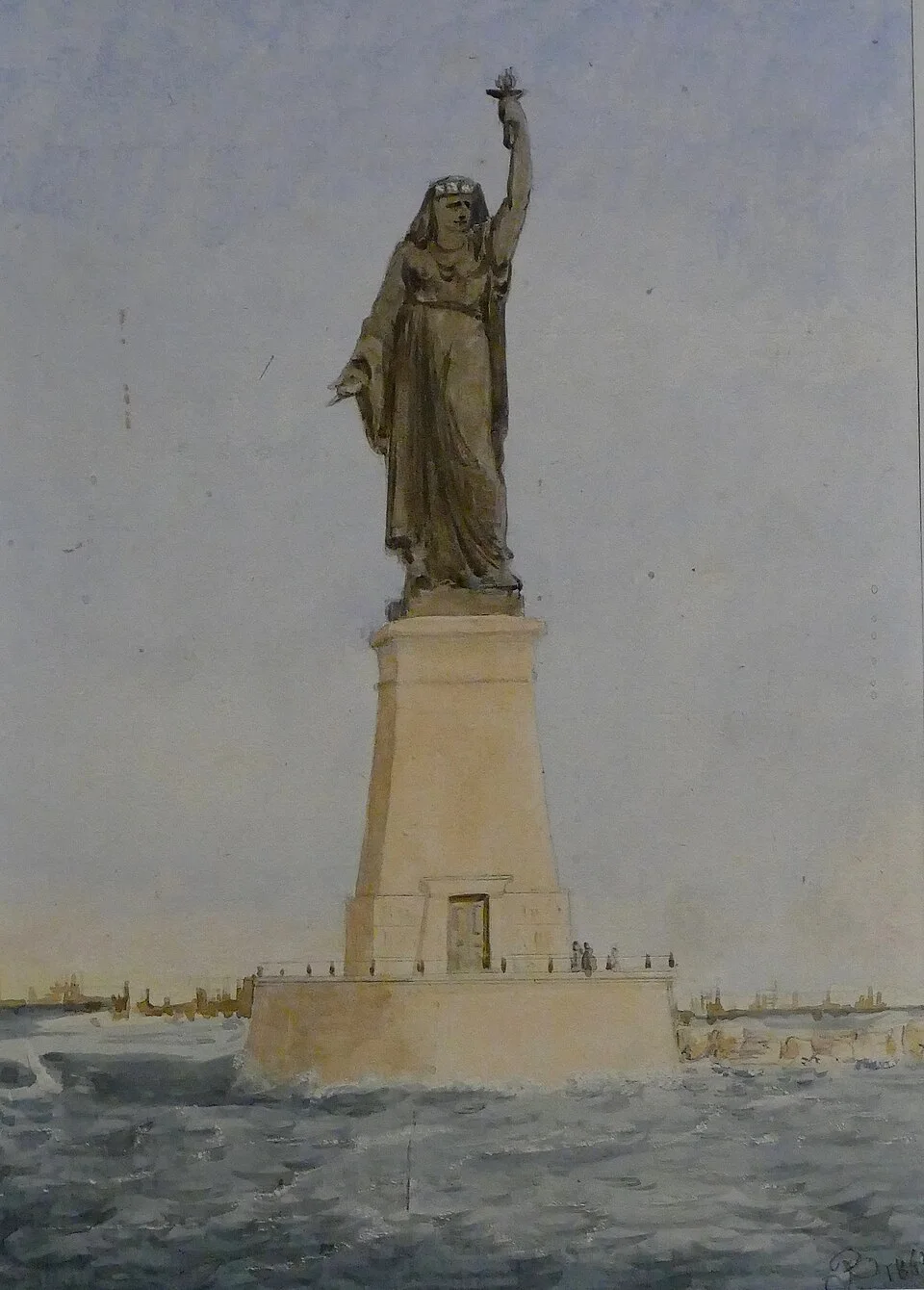
Not as symbol, but as structural diagram: a corridor that compresses distance, redistributes authority, and turns geography into managed circulation.
Completed in 1869, the canal reorganized global trade by converting a bottleneck into logistical time. It accelerated exchange while binding infrastructure to extraction, finance, and geopolitical control.
That same compression logic persists today in submarine cables, satellite constellations, autonomous logistics, and algorithmic markets. The Republic reads the canal as an early model for how technical corridors are built, governed, and contested.
Satellite links, algorithmic finance, distributed sensing, autonomous systems: not topics, but operative conditions tested through partial, inspectable machines.
The Republic works directly with the technical logics shaping present infrastructures, but at reduced scale and with explicit limits. It avoids the opacity of platform power by privileging local computation, low thresholds, open source, and visible system state.
The result is an implementation-based practice that does not just comment on technology. It builds with it, interrupts it, and repositions it under public scrutiny. Devices are not simulations of infrastructure, they are infrastructure, operating at minimum viable scale. Where these methods become applicable to commercial conditions, custom solutions are developed through Suez Canal Agency, which adapts this technical base into deployable work for clients and organizations.
The Studio develops the systems. The Republic pushes them into field conditions. One builds transferable infrastructure, the other stress-tests it in public.
suezcanal.xyz works across architecture, development, deployment, and maintenance. It turns research into systems that remain understandable, maintainable, and non-proprietary for the people who use them.
Where the Republic operates as an experimental edge, the Studio consolidates what proves viable into documented tools, platforms, and open components.
What survives field conditions becomes transferable infrastructure.