Embassy
A rover assumes the role of a moving embassy. Its chassis, sensors and radio make visible the technical conditions that govern access.

Autonomy Staged in Public
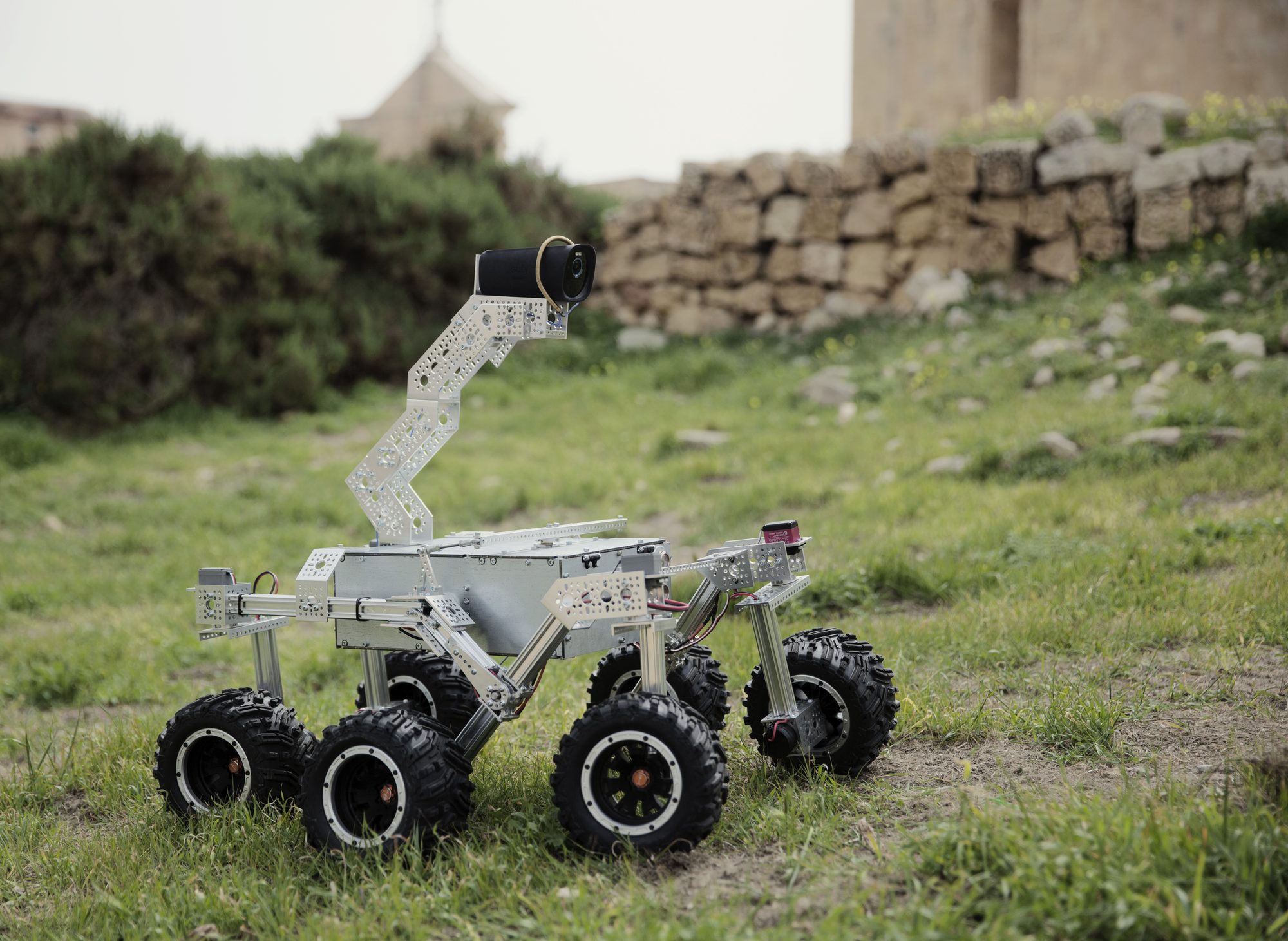
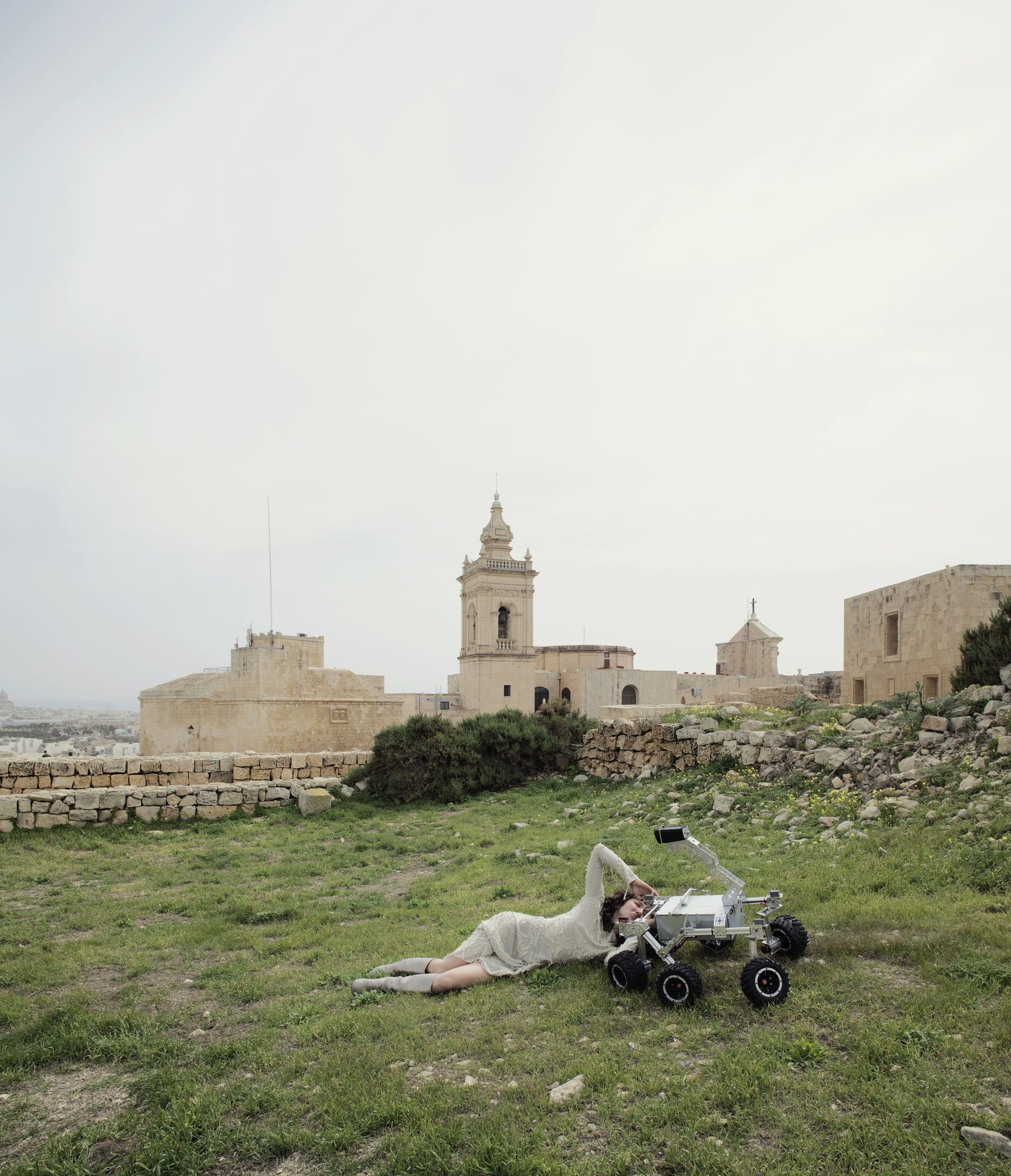
Embassy adapts NASA JPL's Open Source Rover as a six-wheel public instrument. Its open construction keeps locomotion, sensing and transmission materially distinct. The assembly exposes machine behaviour as a sequence of commands, responses and external conditions. Built on NASA JPL's Open Source Rover hardware reference. NASA JPL GitHub ↗ NASA JPL CAD model ↗
Short cycles of movement, pause and relay form the work's public score. Ground resistance, bodily proximity and signal availability alter each cycle. Remote governance acquires a visible duration and a limited radius: motors execute movement, sensors register the site, radio carries observation, and human supervision determines when the sequence continues.

From Reference Chassis to Diplomatic Body
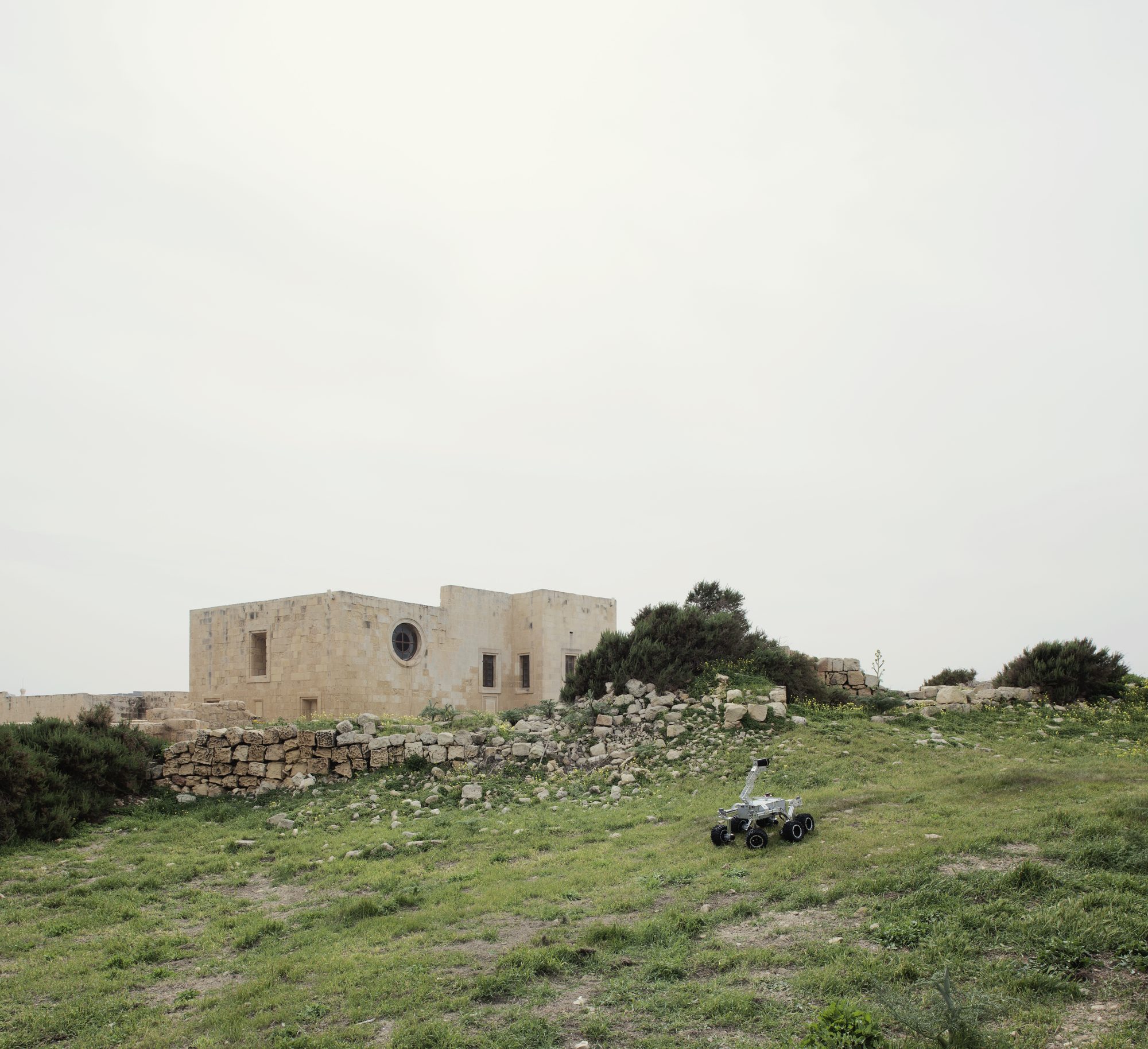
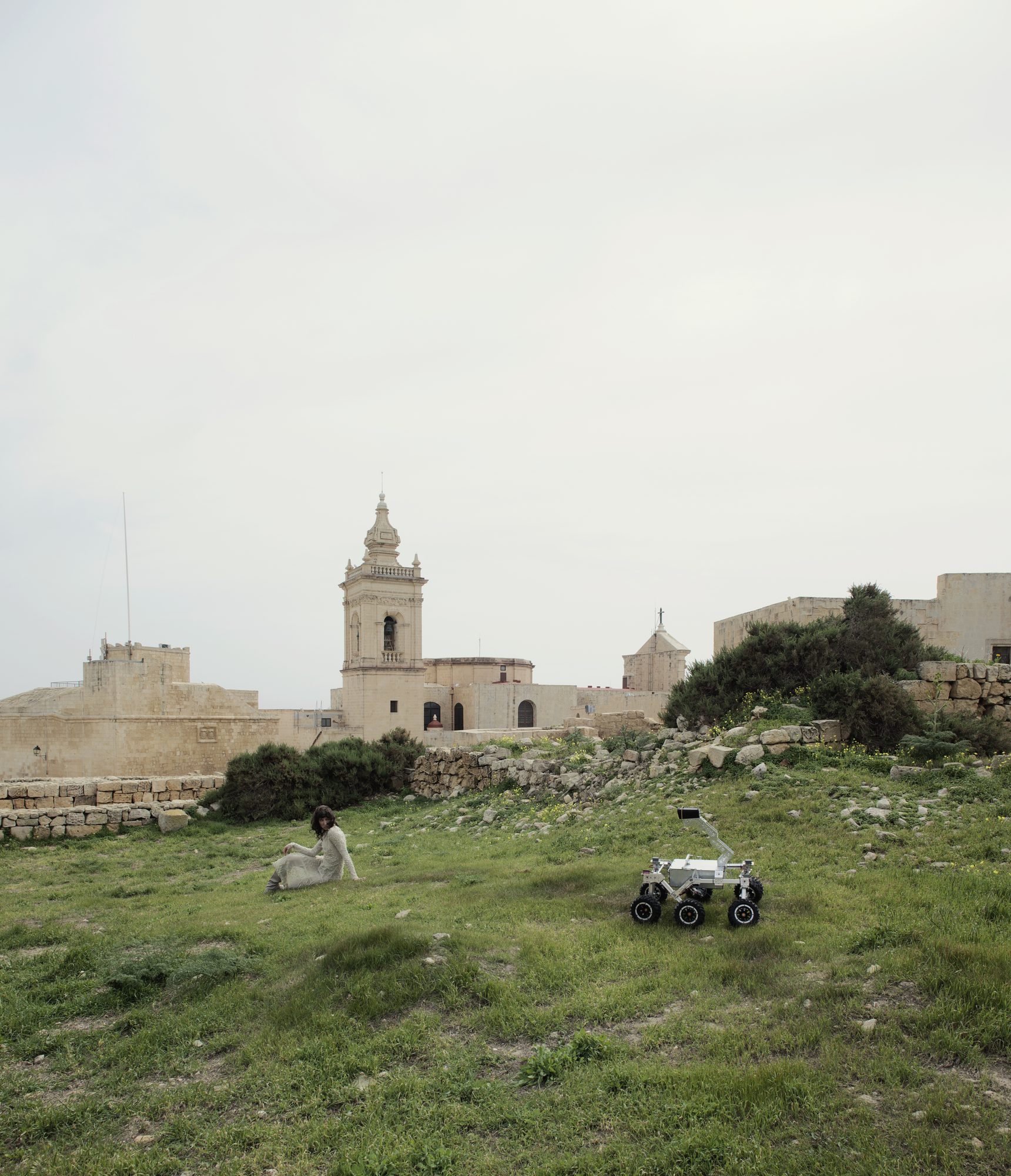
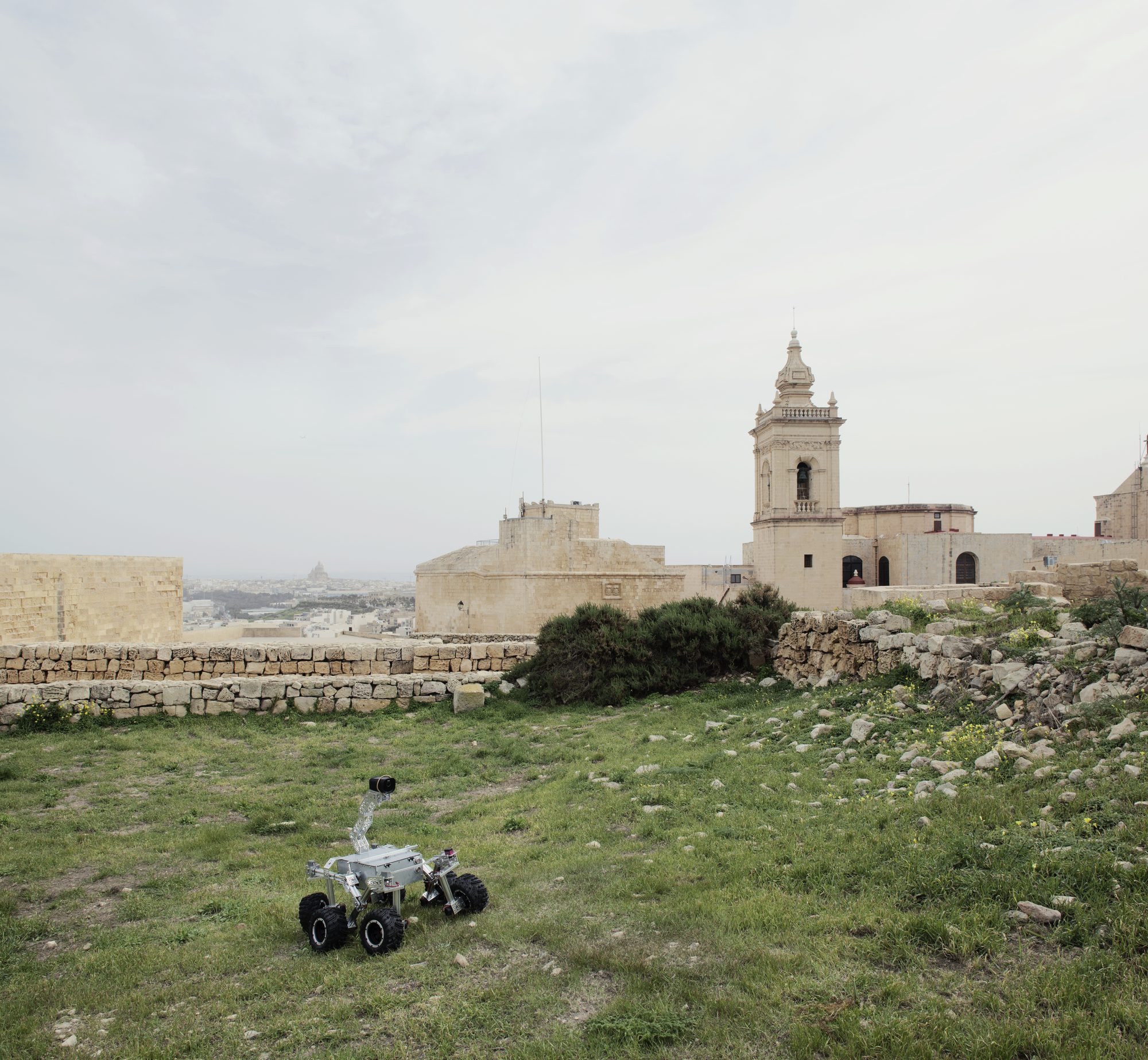
NASA JPL's open-source reference supplies a legible chassis, six modular wheel assemblies and electronics that remain accessible for maintenance. The exhibition assembly assigns a civic function to those parts. Within the Citadel, fortified architecture, an assembled public and the changing reach of the communications link shape the rover's path.
Cables, sensors, wheel motors and radio equipment remain inspectable throughout this translation. Their separation makes the chain of action accountable: a wheel receives torque, a camera frames the field, a connection carries the frame, and an operator reads the result. The diplomatic body emerges from these dependencies and from the temporary jurisdiction produced around its movement.
Movement, Signal and the Radius of Access
Embassy joins displacement across terrain to transmission across distance. Six independently driven wheel modules carry the chassis through short movements and pauses. CCTV, Wi-Fi and speakers extend those movements into observation, remote command and public relay.
Every command passes through material conditions: wheel contact, available battery power, signal range, proximity and on-site supervision. These conditions define the radius within which the platform can act and the public can interpret it. Access appears as an operating state produced between machine, network, institution and public.
A Mobile Embassy at the Citadel
Embassy, 2024 formed part of Malta Biennale's white sea olive groves exhibition at the Citadel, Gozo. Sofia Baldi Pighi directed the main exhibition; Emma Mattei and Elisa Carollo served as curators.
The work belongs to the Republic of Suez Canal, a stateless artistic framework that uses the canal and its imperial history to examine trade routes, citizenship and coexistence beyond national representation. Embassy gives this framework a mobile diplomatic body: it can cross a site, transmit a signal and organise an encounter around its temporary position.
At the Citadel, the rover moved through the terrain as an installation and a performed encounter. Its mobility displaced the embassy from a fixed building to a negotiated radius around the machine. Visitors, operators, signal and ground conditions continually redrew that radius. Autonomy functioned as a public claim under test, measured through interruptions, proximity and the visible work of supervision.
The assembly combines anodised aluminium, stainless steel, rubber wheels and motors, microcontrollers, printed circuits, solar input, battery power, CCTV, Wi-Fi and speakers. The open chassis keeps these subsystems visible and maintainable. Their arrangement also exposes the work's political sequence: energy enables motion, motion positions the sensor, transmission moves observation across distance, and a human decision returns to the vehicle as command.
Inside a fortified site, technologies associated with exploration, surveillance and remote command entered the Biennale's examination of the Mediterranean as a political body. The Citadel supplied more than a setting. Its surfaces, walls and controlled passages materially conditioned circulation and made the machine's limited field of action perceptible.
The project continues a trajectory first made public through Marco Polo Returns through Suez at the Swamp Pavilion of the 16th Venice Architecture Biennale. In Gozo, the Republic took the form of a working object. Its authority depended on components open to inspection, changing conditions and a public able to witness both operation and limit.
Technical Specs and Operational Notes
Full technical documentation for Embassy is available in the public docs hub.