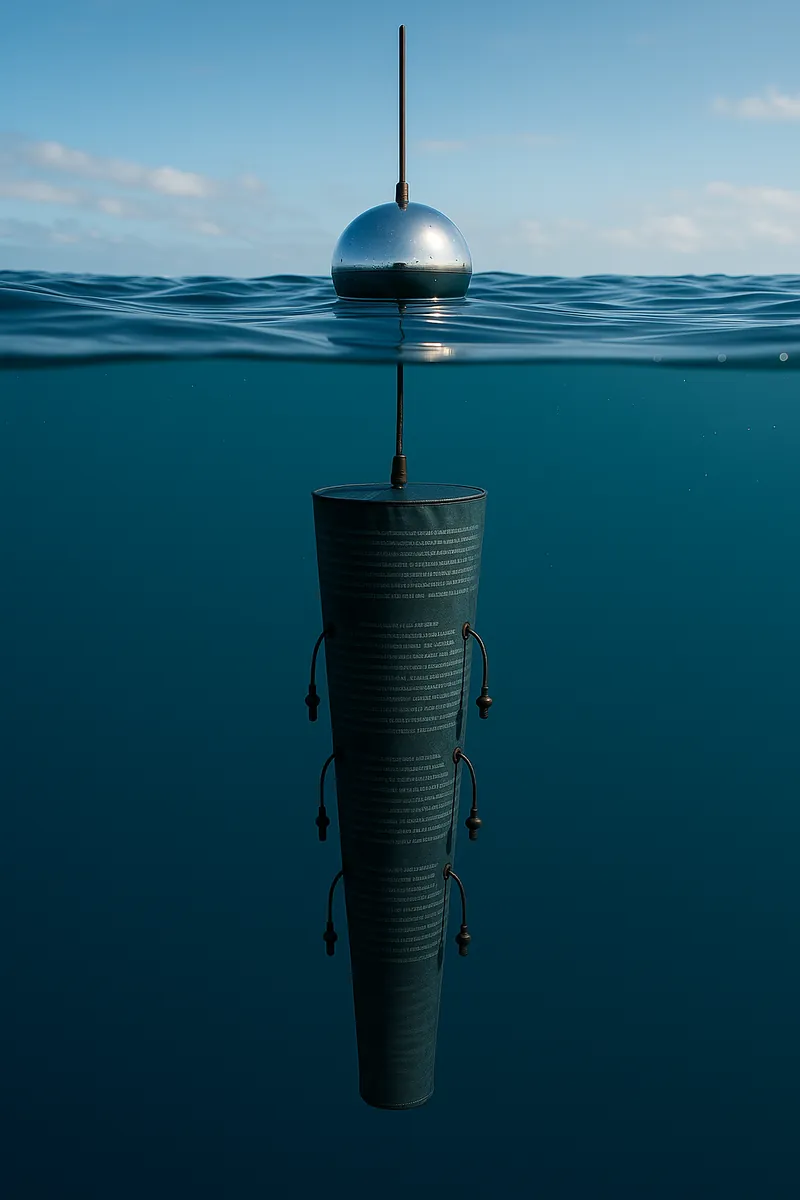
Drifter
A sensor moves with the sea, recording how currents, uncertainty and incomplete communication shape maritime knowledge.
Drift as Method and Evidence
Drifter is a small autonomous buoy conceived for the Central Mediterranean, where environmental forces, shipping routes, surveillance and humanitarian operations intersect. Position, local conditions and communication state form its minimal record.
Current, wind and waves determine the device’s path, making drift both subject and method. The map tests a hypothetical constellation of independent nodes and asks what remains legible when measurement and connectivity remain partial.
Measurement after Continuous Connection
Positioning, atmospheric and marine sensors share a local processor and solar-assisted power system. Periodic transmission replaces continuous connectivity, reducing energy and bandwidth demand while preserving selected measurements.
Filtering occurs on the device before data moves through low-power radio or satellite links. This modular architecture tests what a small autonomous instrument can contribute to maritime observation without assuming permanent cloud access.
Technical Specs and Operational Notes
Full technical documentation for Drifter is available in the public docs hub.